Services
Inventory you can trust, in a storeroom that works.
Never-Lo tailors the scope to the client's needs. Most engagements begin with one of two approaches: a comprehensive audit that documents the true condition of the inventory, or a full-service project that corrects it.
Option 1
Comprehensive inventory audit
Never-Lo conducts a thorough audit of a vessel's spare-parts inventory and provides a detailed account of what the vessel has and what must be corrected.
The audit may determine
- What is physically onboard
- Whether recorded quantities are accurate
- Whether spares can be matched to the inventory-management system
- Which parts are missing or cannot be located
- Which parts are physically present but unidentified
- Which entries may be duplicated
- Which parts are mislabeled
- Which storage locations are incorrect
- Whether physical locations match software records
And what needs correcting
- Descriptions, part numbers, and equipment associations requiring correction
- Labels requiring replacement or standardization
- Storage practices that should be improved
- Recommended corrective actions, prioritized
What the client receives
A clear summary of the inventory's condition, the discrepancies identified, the corrections recommended, and the opportunities for improvement — presented in a format usable by both shipboard crews and shore teams.
What this solves
- Inaccurate or outdated shipboard inventory records
- Unknown condition of critical and long-lead spares
- Mismatch between physical inventory and fleet software data
- Crew distrust of inventory systems caused by past inaccuracies
- Operational risk from missing, duplicated, or obsolete parts
- Ghost parts and obsolete inventory carried in the system
Option 2
Full-service inventory and storeroom restoration
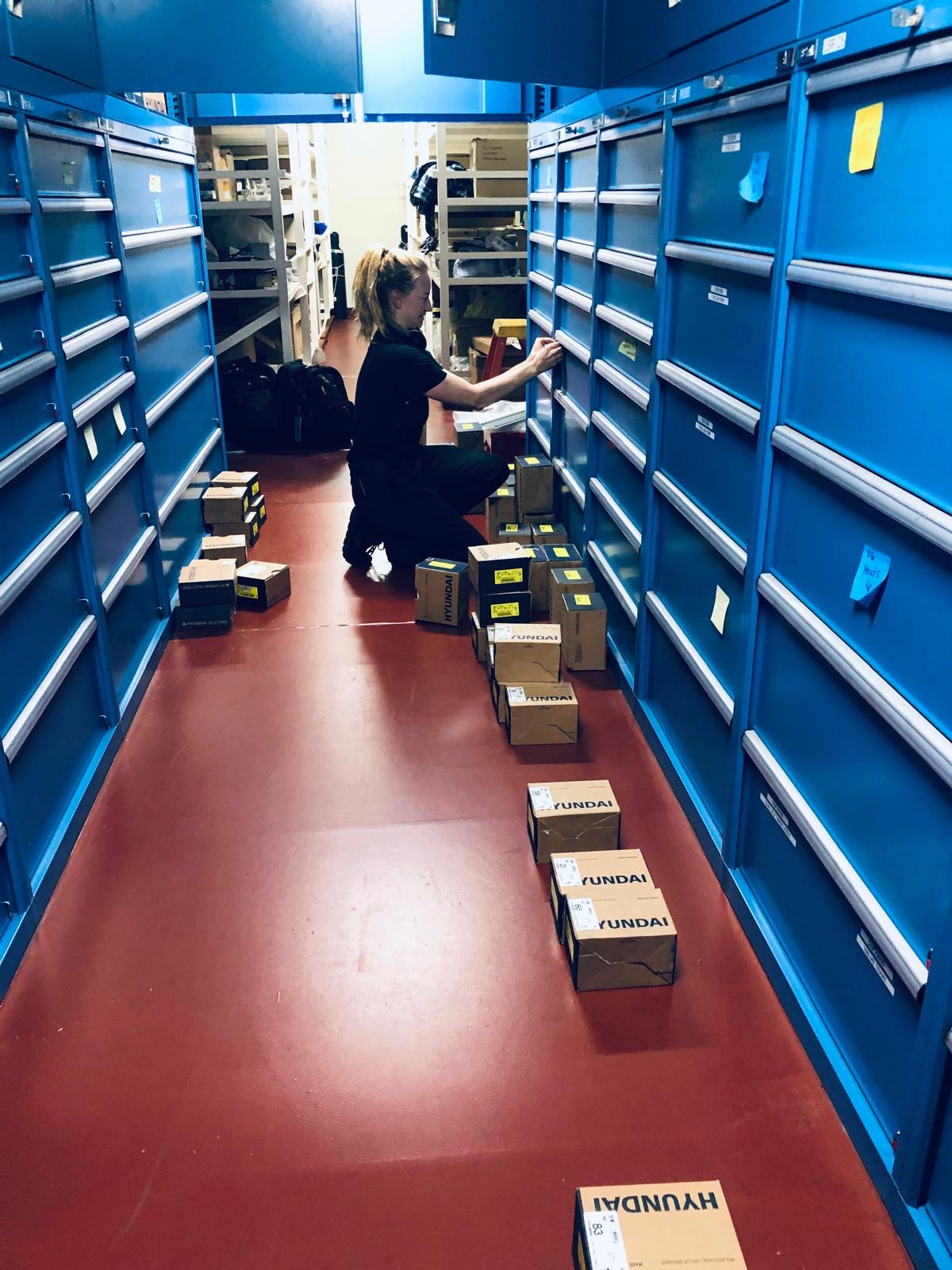
A comprehensive package that goes beyond documenting discrepancies. Never-Lo inventories all applicable vessel spare parts — excluding consumables, unless the client separately includes them in the agreed scope — and corrects the physical inventory, the storage system, and the records together.
- Identifying and physically counting spare parts
- Matching spares to their associated equipment
- Connecting physical spares to software records
- Reconciling physical and recorded quantities
- Correcting inventory information
- Correcting or establishing storage locations
- Reorganizing storerooms for practical access
- Replacing missing, damaged, or ineffective labels
- Repackaging appropriate parts
- Using durable, heat-resistant, marine-suitable labels, bags, and packaging
- Protecting spares from heat, moisture, dirt, and harsh shipboard conditions
- Establishing consistent identification and location systems
- Accounting for completed work
- Documenting remaining recommendations
- Allowing room for future inventory growth
Storeroom layouts are designed around system criticality, frequency of use, and emergency access requirements. Packaging and labeling are selected to withstand heat, humidity, and vibration. Never-Lo does not describe packaging as indestructible or permanent: durable, heat-resistant, marine-appropriate materials help protect critical spares and extend the useful life of labels and packaging under shipboard conditions.
Newbuild & shipyard
Establishing the storeroom before the vessel enters service
Never-Lo can establish a vessel storeroom during the newbuild or shipyard phase — the most proactive point at which to build an accurate inventory-management foundation.
Never-Lo can help
- Plan an efficient and logical storeroom layout
- Establish standardized and scalable storage locations
- Organize and properly store loadout spares
- Identify received spare parts
- Verify that loadout spares are accounted for
- Match spare parts to associated equipment
- Reconcile physical inventory with vessel-management software
- Confirm quantities, descriptions, and locations are updated
- Establish clear labeling and identification systems
- Package appropriate spares using marine-suitable materials
- Create room and a logical structure for future inventory growth
- Prepare the storeroom for long-term operational use
- Work with vessel personnel so they understand the completed system
Establishing it correctly reduces
- Unidentified parts
- Missing inventory
- Duplicate purchases
- Inaccurate recorded quantities
- Poor storage practices
- Software discrepancies
- Time-consuming corrections after the vessel enters service
“The ideal time to establish an effective vessel storeroom is during the newbuild or shipyard phase. Before the vessel enters service, Never-Lo can organize and account for loadout spares, establish scalable storage locations, and reconcile the physical inventory with the vessel’s management software. The result is a functional, accurately documented storeroom that is ready for operation from the vessel’s first sailing and has room to accommodate future inventory growth.”
Shoreside
Marine warehouse-management support
The same discipline applied onboard extends naturally to the shoreside warehouses and facilities that supply the fleet.
- Physical inventory verification and reconciliation in marine warehouses
- Storage-location development and standardized location naming
- Labeling and identification systems that match vessel practice
- Equipment-to-spare-parts association for shoreside stock
- Asset-data reconciliation between warehouse stock and system records
- Inventory procedures and process improvement
Systems
Inventory-data development and software reconciliation
Hands-on experience with marine maintenance, inventory-management, and enterprise asset-management systems, applied to the data itself.
- Data reconciliation between physical stock and system records
- System updates, inventory alignment, and post-audit reporting
- Cleanup of duplicate, obsolete, or incorrectly categorized entries
- Development of usable descriptions, part numbers, and equipment links
“Never-Lo brings hands-on experience working with Maximo®, NSE, and BASSnet®, and other computerized maintenance and inventory-management systems. This experience is independent and project-based. Never-Lo is not employed by, endorsed by, or formally affiliated with the developers or owners of these platforms.”
Working with the crew
Collaborative, but not a training company
“Never-Lo works alongside vessel personnel when appropriate, providing practical guidance and familiarization throughout the project. This collaborative approach helps the crew understand and maintain the completed system; however, formal training is not the primary purpose of the engagement.”
Never-Lo is engaged to complete the inventory, asset-data, storeroom, warehouse, or reconciliation scope. Familiarization happens as part of that work — focused on real shipboard workflows, spare handling, storage and labeling practice, and correct use of the vessel's inventory software. Formal training programs are only delivered when separately included in the scope.
Scope notes
- Consumables are excluded from the full inventory scope unless separately agreed
- Scope, duration, and deliverables are confirmed per vessel or facility
- Findings are delivered in a format usable by both crew and shore teams
- Recommendations are prioritized so corrective work can be staged